

curated by Gabi Scardi
Opening: 6 p.m., Friday, 27 November
27 November 2026 – 7 March 2027
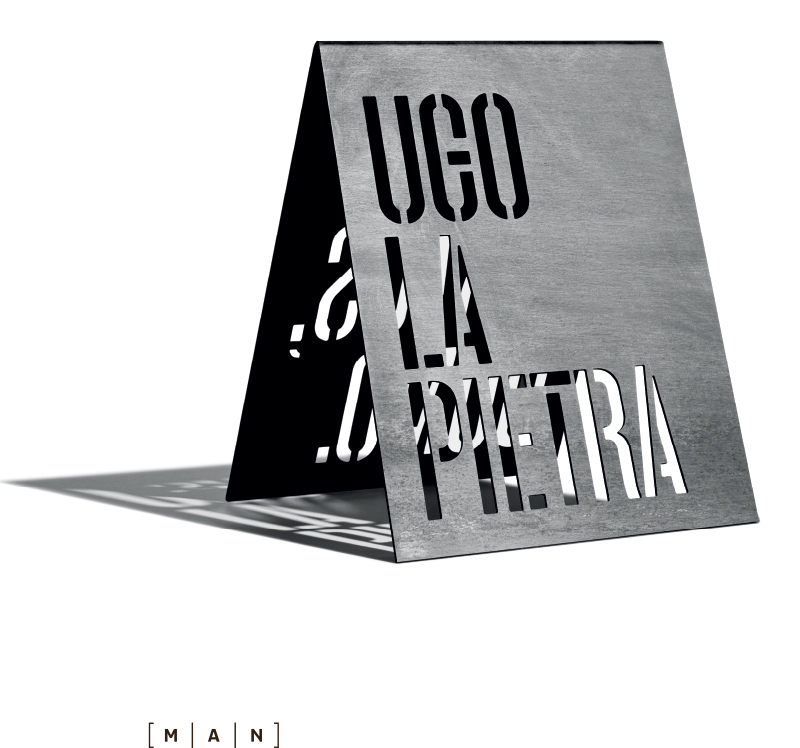
The MAN Museum in Nuoro is pleased to announce a solo exhibition dedicated to Ugo La Pietra (b. 1938), scheduled for the coming season and entitled Domus, Domo. Curated by Gabi Scardi, the exhibition is part of an ongoing research project exploring the work of Italian artists who, since the 1960s, have investigated social change and the relationships between individuals, communities and their local environments through experimental artistic practices and shared theoretical approaches.
Ugo La Pietra. Domus, Domo is an exhibition bringing together around eighty works (including acrylic paintings, objects, ceramics, tapestries, installations, drawings and photomontages, and artists’ films) and tracing La Pietra’s artistic development from 1960 to the present day. A significant selection of works punctuates a journey through various aspects of inhabiting, a central theme in the work of the artist, who has explored urban and extra-urban spaces via different narratives and media. The various museum galleries are thus characterized by distinct themes, also reflected in the catalogue published by Quodlibet with graphic design by Leonardo Sonnoli: Home and City, Away from Home, Inside and Outside the Home, Making a Home, Home and Nature, Home and Garden.
As the artist explains: “From the 1960s to the present day, my research has evolved through an examination of society and the changing ways in which we inhabit our surroundings, from the private to the public space.” For La Pietra, expanding the fluid boundaries of architecture means exploring the relationship between the body and space, the domestic sphere and the thresholds that open onto the urban landscape. The city, in turn, becomes a space shaped by our presence and by the needs, rhythms, habits and aspirations of its inhabitants, as well as by the social and civic dynamics that inform their choices.
In the catalogue, Gabi Scardi writes: “In the official image of the city, which presents itself as ordered, and in the sanctioned narrative of architecture, which builds according to codified models and tends to respond to disciplinary norms and strategic objectives imposed from outside, La Pietra constructs a genuine counter-narrative that is grounded in the uncodified, and precisely in what eludes planning or is excluded from it. Above all, however, La Pietra reflects on the shifting boundary that runs through both the city and society, and on how it need not necessarily signify separation, but can instead become an interface: a space to be inhabited, a source of opportunity and value. This transformation of the boundary, from a line of division into a space of connection, stands as one of the most enduring themes of his research.
These marginal and liminal spaces would become the primary focus of his experiments. The thresholds between the city and that which is no longer the city – urban courtyards, pavements, benches, doors, windows and balconies – would become the subjects of his systematic investigation into the ways we inhabit space.
His interventions are genuine acts of engagement with, appropriation of and production of space, and can take place both in informal settlements and in formally planned areas. What interests him above all are those places where the boundaries between inside and outside become porous and the logic of separation is suspended.”
The connection with Sardinia is particularly evident in his 1978 project exploring seaside culture on Poetto beach. Through a photographic and analytical study, he documented the famous “casotti”, the small wooden huts that lined Cagliari’s beach, built from the 1910s onwards. In his theoretical writings, La Pietra described these structures as an example of “spontaneous architecture”: the organic emergence of modest yet comfortable spaces designed for temporary living, such as summer retreats by the sea. Born out of practical necessity, this form of architecture gradually became established over time, transforming both the perception of the landscape and the character of the area. Ugo La Pietra’s involvement in the Taccas. Nuovi tappeti sardi project, an exhibition organized by ISRE and staged in Nuoro, dates to 1987. It featured designs by Italian artists, architects and designers – from De Lucchi to Baj, Mendini and Sottsass – which were then woven by Sardinian artisans. Furthermore, in 2009, the artist created a series of ceramics for the 19th Biennale of Sardinian Handicrafts Today, he is presenting a previously unseen work created in collaboration with the weavers at Studio Pratha, who have produced a series of tapestries woven from his preparatory drawings.
Ugo La Pietra – Biography Born in Bussi sul Tirino (Pescara) in 1938, and originally from Arpino (Frosinone), Ugo La Pietra lives and works in Milan, where he graduated in Architecture from the Politecnico in 1964. Trained as an architect, he has also worked as an artist, filmmaker, editor, musician, cartoonist and lecturer. Since 1960, he has defined himself as a researcher in communication and the visual arts, working across the fields of art and design. An indefatigable experimenter, La Pietra has explored a wide range of artistic movements and disciplines, from Pittura Segnica and Conceptual Art to Narrative Art, artist’s film, socially engaged art and Neo-Eclecticism, working across a variety of media. His research has given rise to the theory of the “Disequilibrating System”, an independent strand of Radical Design, as well as a series of significant sociological investigations. These include “Telematic House”(MoMA, New York, 1972; Fiera di Milano, 1983), “Relationship Between Real and Virtual Space” (Triennale di Milano, 1979 and 1992), “The Neo-Eclectic House” (Abitare il Tempo, 1990) and “Bathing Culture” (Centro Culturale di Cattolica, 1985–95). His work has been presented in numerous exhibitions in Italy and abroad, including at the Triennale di Milano, Biennale di Venezia, Musée d’Art Contemporain de Lyon, FRAC Centre in Orléans, Museo Internazionale delle Ceramiche in Faenza, Fondazione Ragghianti in Lucca, Fondazione Mudima in Milan, Museo MA*GA in Gallarate, Fondazione Beverly Pepper in Todi, Palazzo Collicola in Spoleto, Musei Civici di Monza, Fondazione La Rocca in Pescara and Homo Faber at Fondazione Giorgio Cini in Venice. Through his artistic, theoretical, educational and publishing work, La Pietra has consistently championed the humanistic and regional dimensions of art and design.