

Concept and scientific direction: Archivio Franco Pinna
Inauguration: Friday 5 December 2025 at 6:30 pm
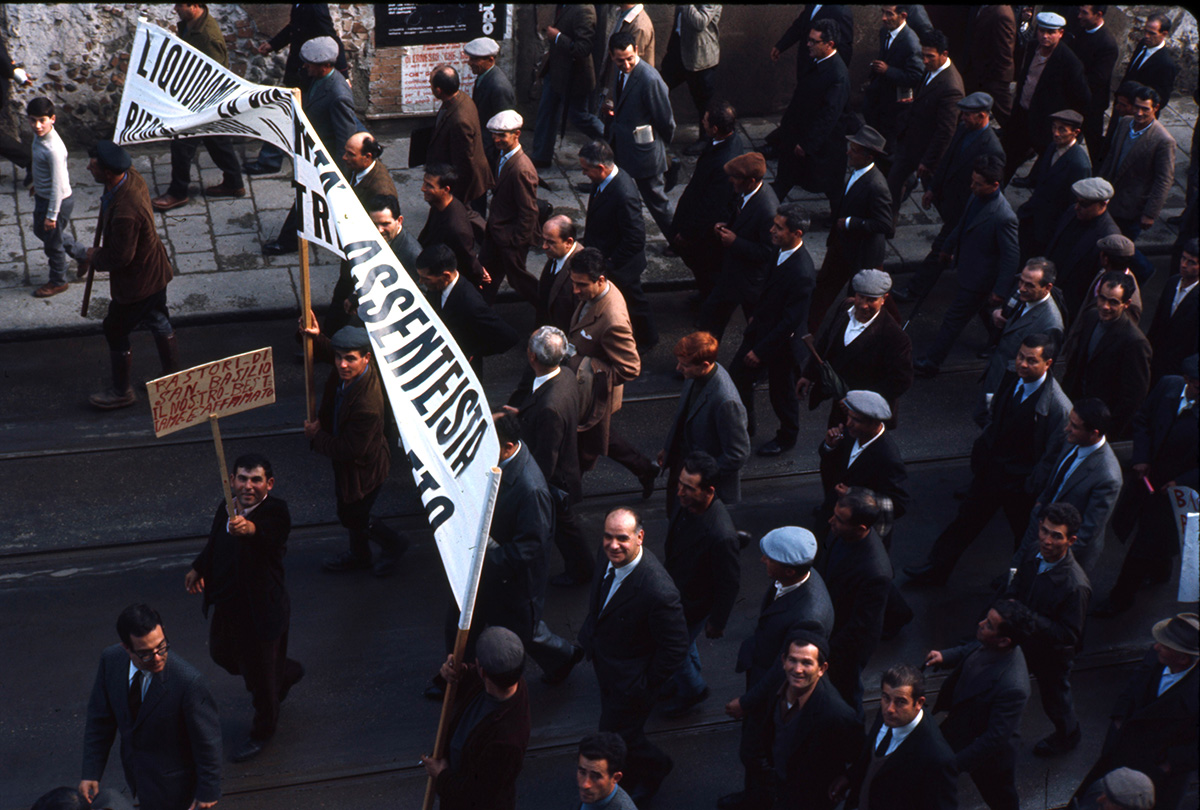
The exhibition Franco Pinna. Sardegna a colori. Fotografie recuperate 1953–67 marks a further stage in the exploration undertaken by the MAN on photographic language and its relationship with Sardinia, a land of inspiration and experimentation for generations of artists, besides celebrating the one-hundredth anniversary of the acclaimed Sardinian photographer’s birth. Franco Pinna (La Maddalena, 1925 – Rome, 1978) was a master of 20th-century Italian photography and, through this exhibition, the MAN is showcasing works that were long forgotten, offering visitors a new and surprising dimension of his perspective: that of colour. In keeping with recent investigations carried out by the Museum on authors and visions of the Sardinian landscape, this exhibition broadens our perception of a photographer who was almost exclusively appreciated so far thanks to his black and white shots.
The exhibition comprises approximately eighty works, including colour photographs – most of these are displayed for the very first time – and archival material, and unfolds through a journey across Pinna’s visual and professional history, offering new hints for a critical assessment of his oeuvre. The images were selected further to a thorough recovery and digital restoration of the original hues and are displayed along with black and white shots of the same objects, thus offering an occasion for a comparison. The exhibition also includes transparencies retrieved from the Archivio Franco Pinna, which testify to the comprehensive documentary approach endorsed by the photographer. A selection of period magazines, including Vie Nuove, Noi Donne, L’Espresso, and Panorama, confirms his commitment to the use of colour, which would lend a sense of modernity to the glossy magazines vs. the historicization implied in the classic black and white shots.
The exhibition begins with Orgosolo 1953, Pinna’s first colour reportage in Sardinia, to then explore the most meaningful stages of his production on the Island – Canne al vento (1958), Argia a Tonara (1960), and the shots used for his acclaimed volume Sardegna. Una civiltà di pietra (1961) – up to his reportages on banditry and the protests of shepherds of 1967. The sequences create a sort of long narrative, highlighting the evolution of a language that takes on an autonomous and poetic dimension through colour, capable of seizing the spirit that enlivens an archaic and all the same modern Sardinia.
What emerges is the bond between documents and rituals, which pervades his oeuvre and distinguishes his way of observing reality: as Federico Fellini quoted in 1976, Pinna showed a “slowness typical of a hierophant”, suspended between the gaze of a scientist and that of a minister of cult. It is precisely through this dimension suspended between documents and rituals that the exhibition housed at the MAN wants to review his oeuvre: a path through reality culminating in a revelation.
Franco Pinna
(La Maddalena, 1925 – Rome, 1978)
One of the most renowned photojournalists of his time, Franco Pinna was a key figure of Italian photographic Neorealism. After activism in Rome in the Resistance movement and a brief stint as a documentary filmmaker, he made his debut as a professional photographer in 1952 in the Roman cooperative Fotografi Associati and followed the anthropologist Ernesto de Martino on his ethnographic expeditions to the Lucania and Salento regions. In 1961, he published Sardegna. Una civiltà di pietra, which would be his most important publication. Beginning in 1964, he became Federico Fellini’s trusted photographer. Through more than 300,000 shots, Pinna managed to combine civic engagement and aesthetic rigour, documenting the transformation that Italy was going through in those years and capturing the human side of the 20thcentury with a poetic and keen gaze.
The Archivio Franco Pinna, based in Rome and Bologna, has gathered and enhanced the photographer’s heritage since 1997, promoting research and exhibitions that keep his memory alive.
Concept and scientific direction by Archivio Franco Pinna
Curator: Paolo Pisanelli, OfficinaVisioni
in collaboration with Cinema del reale, Erratacorrige, Big Sur
Coordination with MAN by Alessandro Moni
Digitalisation, digital restoration, editing of photographs: Gloria Fulgeri, Claudio Domini
Video-installation direction and editing: Matteo Gherardini, Paolo Pisanelli
Officina Visioni coordination by Federica Facioni
Catalogue by Nomos edizioni, ita/en
Graphic design by Sabina Era
© Archivio Franco Pinna, Rome/Bologna all rights reserved